How Market Trends
Influence Appraised Value
Real estate markets are never static. Appraised value is a "snapshot in time" that must account for supply, demand, and economic shifts happening right now.
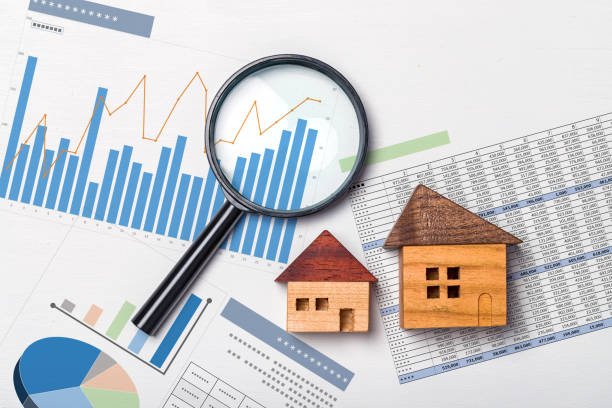
Key Drivers of Property Value
Value is dictated by the interaction of multiple economic forces. Appraisers weigh these factors to determine if a market is rising, stable, or softening.
The Appraisal Trend Matrix
To ensure the final valuation reflects the behavior of today’s buyers, not the assumptions of a market that existed six months ago.
The Annual Market Cycle
🌸 Spring Surge
Highest inventory and highest demand. Prices often peak as families look to move before the new school year starts.
☀️ Summer Stabilization
Market typically plateaus in July and August as vacation schedules lead to fewer active buyers and showings.
🍂 Fall Rebound
A second, shorter burst of activity occurs in September/October as buyers try to close before the holidays.
❄️ Winter Cooling
Inventory and demand both drop. Appraisers must be careful to distinguish between "lower prices" and "seasonal slowdown."
🏦 Interest Rate Shocks
Sudden changes in BoC rates can override seasonal patterns, causing immediate shifts in buyer purchasing power.
How We Evaluate Income
Appraisers use specific technical steps to determine the contributory value of rent.
1. Actual Rent Verification
We review current leases and payment history. This reflects the property’s current performance, which is most relevant when tenancies are stable and aligned with market rates.
2. Market Rent Analysis
Using comparable rental data, we determine what the property *should* earn. This is used when units are vacant or current rent is significantly below market levels.
3. Income Approach Calculation
We apply the formula: Value = Net Operating Income / Cap Rate. This directly translates rental performance into a defensible market value.
4. Stability & Risk Review
We analyze vacancy history, length of occupancy, and rent deposit status. Stable tenancies support lower risk and higher overall valuation confidence.
5. Legal & Zoning Audit
We clarify whether suites are legal or unpermitted, as this determines if income can be included in the appraisal and recognized by lenders.
Optimizing Rental Value
🏠 Unit Condition
Well-maintained units attract higher rent and stronger, more reliable tenants, leading to better valuation outcomes.
📜 Lease Terms
Fixed-term leases are more stable than month-to-month agreements and are viewed more favorably by appraisers.
🛤️ Tenant Profile
A history of reliable, long-term tenant occupancy reduces the risk of vacancy and income disruption.
📍 Market Alignment
Properties in high-demand rental areas support higher rents and consistently lower vacancy rates.
💎 Below Market Potential
If actual rent is low, we rely on market rent data to ensure we do not undervalue your property's true potential.
What Market Trends Are NOT
Future Predictions
Appraisals are retrospective. They reflect the market as of today, not what it might be in 12 months.
City-Wide Averages
A "Toronto Average" doesn't dictate a "Burlington Pocket." Localized micro-trends always override broad city stats.
News Headlines
Appraisers use hard sales data (MLS), not speculative media reports or "fear-based" commentary.
List Price Guarantees
A high list price does not equal a high market trend. Trend is measured by closed sale prices, not asking prices.
The "Neighbor" Rule
One neighbor's lucky high-sale doesn't set a trend. A trend requires multiple data points moving in the same direction.
Policy Instant Fixes
New government policies (taxes, grants) take months to reflect in market trends and appraised values.
Common Misunderstandings
“Prices only go up in the GTA.”
Real estate is cyclical. Markets rise, plateau, and soften. Appraisers must report the actual current phase of the cycle.
“My neighbor sold high last month, so I will too.”
If interest rates or inventory levels shifted significantly in that month, the market trend may have already moved.
“The appraiser must match the list price strategy.”
Listing low to spark a bidding war is a strategy, not a market trend. Appraisers only adjust based on final sold data.
“Broad economic news dictates my home's value.”
Local factors—like a new school or improved transit—often cause micro-markets to outperform general economic trends.
FAQ
Common questions regarding market trends and property valuation.
No. An appraisal is only valid for the effective date listed on the report. We do not forecast future appreciation or depreciation.
Yes. Underwriters look at the "Market Conditions" section of the report to determine if the risk profile of the neighborhood is stable.
In highly volatile periods (like sudden interest rate hikes), buyer behavior can shift instantly, though it takes a few weeks for sold data to prove the trend.
We typically analyze the last 12 months of data, with a heavy emphasis on the most recent 90 days to capture current momentum.
Understand Your Market Position
If you want clarity on how current market trends affect your property’s value, our appraisal team can provide a detailed analysis using the most recent local data.