The Nuance of
Luxury & Custom Homes
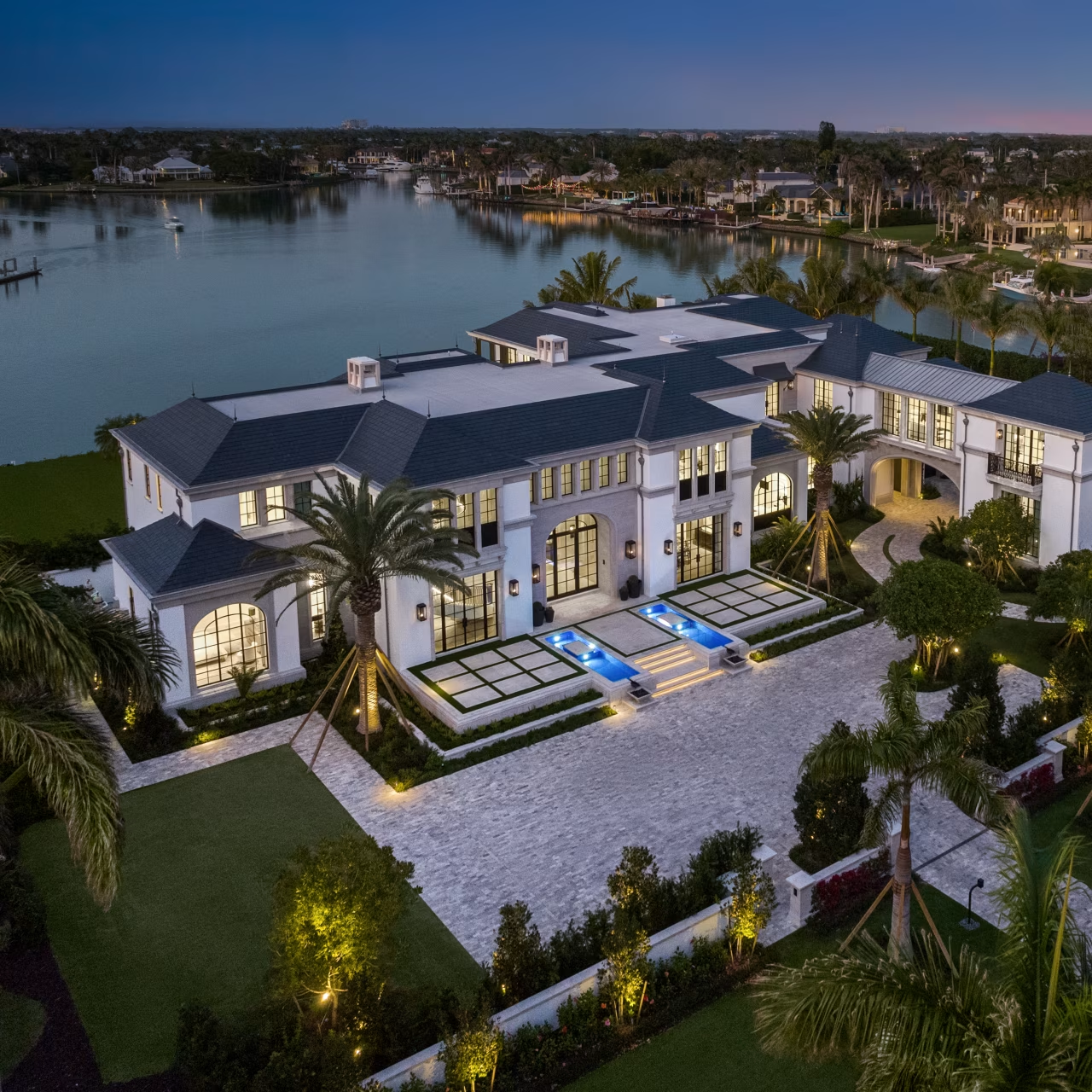
Large custom homes and luxury properties require a specialized level of appraisal analysis beyond standard market metrics.
Why This Matters
Luxury homes are complex assets that defy standard "price-per-square-foot" metrics. Accurate appraisal protects your equity by aligning high-end features with defensible market evidence.
Luxury Valuation Challenges
Understanding how appraisers navigate these complexities helps luxury homeowners avoid inflated expectations and ensures a smoother, more transparent lender review process.
Property Characteristics
What Defines A Luxury Or Custom Home
- Unique floor plans and elevations
- Structural innovations and custom engineering
- Premium stone, hardwoods, and millwork
- High-performance building envelopes
While these features represent significant investment, they contribute value only when the market recognizes and pays for them. Our role is to distinguish between "cost to build" and "market value" through rigorous paired-sales analysis.
How We Measure Lot Premiums
Appraisers rely on clear market evidence to support lot premiums through rigorous technical methods.
1. Comparable Sales With Similar Features
The strongest evidence comes from matching premium to premium. Even if it reduces the pool of available sales, we prioritize homes with similar ravine, water, or privacy characteristics to ensure accuracy.
2. Paired Sales Analysis
We mathematically isolate the lot's value by studying price differences between premium lots and standard interior lots. This helps us understand the typical market reaction to your specific site features.
3. Adjustments Based On Buyer Behavior
Our adjustments reflect what the market has historically paid for similar features. We differentiate between a homeowner's personal enjoyment and the actual dollar amount a typical buyer contributes to the final price.
4. Marketability Review
Premium lots often sell faster. We analyze Days on Market (DOM) patterns to measure buyer preference, which provides supporting evidence for the desirability—and value—of your lot.
5. Lender-Ready Narrative Support
Because premiums can be subjective, our reports include a detailed narrative. We explain the "why" behind every adjustment, providing the transparency that bank underwriters require for high-value properties.
Comparable Selection Challenges
🔍 Limited Market Activity
True luxury matches are often scarce. We mitigate this by expanding our data search across a wider geographic radius or looking back at historical sales to find properties with similar utility.
⏳ Time Sensitivity
When high-end sales are infrequent, we may use older data. These are paired with sophisticated "Time Adjustments" to reflect current market conditions and inflation indices.
⚖️ Subjective Premiums
Features like bespoke wine cellars or smart home integration are highly subjective. We rely on paired-sales analysis to extract the actual market reaction to these specific high-cost upgrades.
📉 Data Scarcity Support
A limited pool of comparables can still support a credible value opinion, provided it is backed by intensive narrative support and professional logic for the lender's review.
💎 The Power of Narrative Support
For luxury assets, the "why" is as important as the "what." We provide a detailed narrative that explains exactly why each comparable was chosen and how every dollar of adjustment was calculated, ensuring underwriter confidence.
Why Luxury Features Do Not Always Return Full Value
Super-Adequacy
When upgrades exceed neighborhood expectations, they become "super-adequate." A $100k outdoor kitchen in a $1M neighborhood rarely returns its full cost.
Hyper-Personalization
Finishes that are overly personalized or niche may appeal to a very narrow buyer group, leading the market to discount the feature's cost significantly.
Diminishing Returns on Scale
Value does not climb linearly with size. Being significantly larger than surrounding properties often leads to a lower price-per-square-foot as you hit the area's price ceiling.
Unsupported Costs
Market evidence always outweighs renovation invoices. If comparable sales don't show buyers paying for a specific high-end material, the "value" will fall short of the "cost."
The Principle of Regression
The value of a high-end home is often pulled down by the presence of lower-value properties in the immediate vicinity, regardless of the home's internal quality.
Functional Obsolescence
A luxury home with an irregular layout or "lost" square footage may see its architectural design investment offset by a lack of functional utility for the typical buyer.
Common Misunderstandings
“Luxury cost equals luxury market value.”
Buyers pay for perceived utility, not the homeowner’s receipts. An appraiser measures the "contributory value"—how much extra a typical buyer pays for that feature—not the cost of the invoice.
“A custom home is inherently worth more than others.”
Customization only adds value if the market supports it. Highly niche designs can actually limit the buyer pool, potentially leading to a lower valuation compared to a more "traditionally" luxury home.
“Bigger square footage means a much higher value.”
In luxury, functionality outweighs volume. An 8,000 sq. ft. home with poor flow or "dead space" often sees diminishing returns, resulting in a significantly lower price-per-square-foot than smaller, more efficient peers.
“Unique luxury features guarantee a higher appraisal.”
Uniqueness is a risk for lenders. Without comparable sales showing a buyer previously paid a premium for a similar feature, an appraiser cannot mathematically justify a value increase.
Luxury Appraisal FAQ
Common questions regarding high-end valuations and custom property analysis.
Luxury properties have a wider range of possible values because they lack the "cookie-cutter" data of standard subdivisions. Lenders require more rigorous evidence, including extensive narrative descriptions of finishes and expanded market trend analysis, to justify the higher risk associated with high-value loans.
No. Upgrades only add contributory value when the market demonstrates a consistent willingness to pay for them. While a $150,000 smart-home system is impressive, if local comparable sales show that buyers only pay a $50,000 premium for tech-ready homes, the appraisal must reflect the market's reaction, not the installation cost.
Yes. Because luxury transactions occur less frequently, we often use sales from 6–12 months ago (or longer). We bridge this gap using proper time adjustments and strong narrative support to explain how the property remains relevant in the current market landscape.
The buyer pool for prestige homes is significantly smaller, and preferences at higher price points are highly specific. Appraisers analyze "Days on Market" (DOM) differently for luxury homes, as a longer exposure time is often expected and doesn't necessarily indicate a flaw in the property or its price.
Expert Valuations for Custom & Luxury Assets
If you own a custom or luxury property and want a clear, lender-aligned appraisal that reflects true market behavior, our team provides the rigorous analysis and narrative support required for high-value assets.